
In modern manufacturing, welding quality and production efficiency directly influence product performance and overall competitiveness. Industries such as automotive, electronics, machinery, and metal fabrication require welding solutions that can provide stable results while reducing production challenges. However, traditional welding methods often rely heavily on operator experience, which may lead to inconsistent weld quality, longer processing times, and higher labor requirements.
An Automatic Laser Welder combines advanced laser technology with automated control systems to achieve precise, repeatable, and efficient welding performance. By controlling laser energy, welding paths, and processing parameters digitally, manufacturers can improve accuracy, reduce material deformation, and support large-scale production. This article will explore the key benefits of automatic laser welding and why it has become an important solution for modern industrial applications.
What Is an Automatic Laser Welder?
Basic Overview of Automatic Laser Welding
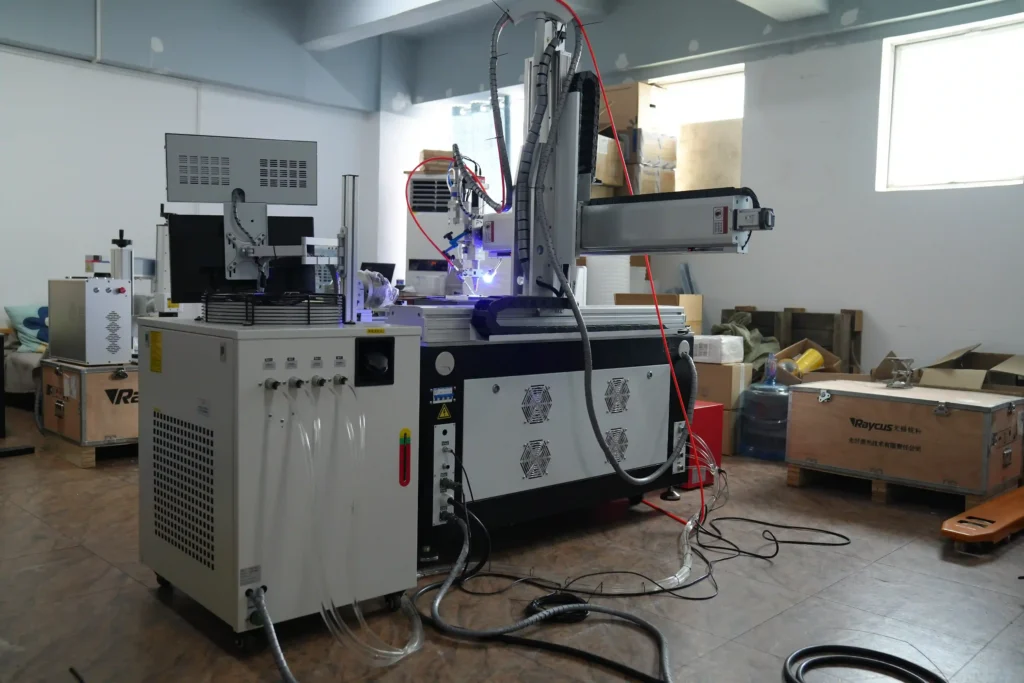
An Automatic Laser Welder is an advanced welding system that uses a focused laser beam and automated motion control to join metal components with high precision. Unlike conventional welding methods that rely heavily on manual operation, it uses programmed parameters to control welding speed, laser power, and movement paths, helping achieve more stable and repeatable results.
During the process, the concentrated laser energy creates heat in a specific welding area, melting the material and forming a strong connection after cooling. Because the heat input is highly controlled, the process can minimize unnecessary thermal impact on surrounding areas. This technology is widely used for materials such as stainless steel, carbon steel, aluminum, and copper alloys, making it suitable for industries requiring consistent quality and reliable production performance.
What Are the Main Benefits of Using an Automatic Laser Welder?
1. Higher Welding Precision and Better Accuracy
One of the most significant advantages of an Automatic Laser Welder is its high welding precision. The focused laser beam delivers concentrated and accurate energy, allowing manufacturers to create narrow and controlled weld seams with consistent quality. This precision is especially valuable for components that require strict dimensional accuracy, such as automotive parts, electronic assemblies, and mechanical components.
Compared with some traditional welding methods, laser welding can reduce excessive heat input and minimize deformation during processing. Modern laser welding equipment can achieve positioning accuracy within micron-level ranges depending on machine configuration, helping manufacturers maintain stable welding results across repeated production cycles and improve the reliability of finished products.
2. Faster Production and Improved Manufacturing Efficiency
Production efficiency is another important benefit of an Automatic Laser Welder. Automated systems can reduce manual adjustment time and complete repeated welding tasks without frequent operator intervention.
In traditional workflows, manufacturers may need multiple steps, including positioning, welding, inspection, and additional finishing. Automated laser welding can simplify these processes by combining accurate movement control and programmable welding operations into one system. The efficiency advantages include:
- Reduced setup time
- Faster processing cycles
- Improved production consistency
- Less manual handling
For high-volume manufacturing environments, these improvements can help companies increase output while maintaining stable product quality.
3. Reduced Labor Requirements and Lower Production Costs
Automation helps manufacturers reduce dependence on manual welding operations. While skilled technicians remain important for programming, monitoring, and quality management, automated systems can handle repetitive welding tasks more efficiently.
An Automatic Laser Welder can also reduce production costs by lowering the number of welding defects and minimizing rework requirements. Consistent welding parameters help reduce material waste caused by uneven welds or incorrect processing.
In addition, automated welding systems generally require fewer manual adjustments during production, allowing companies to improve resource utilization and achieve better long-term operational efficiency.
4. Improved Welding Quality and Cleaner Results
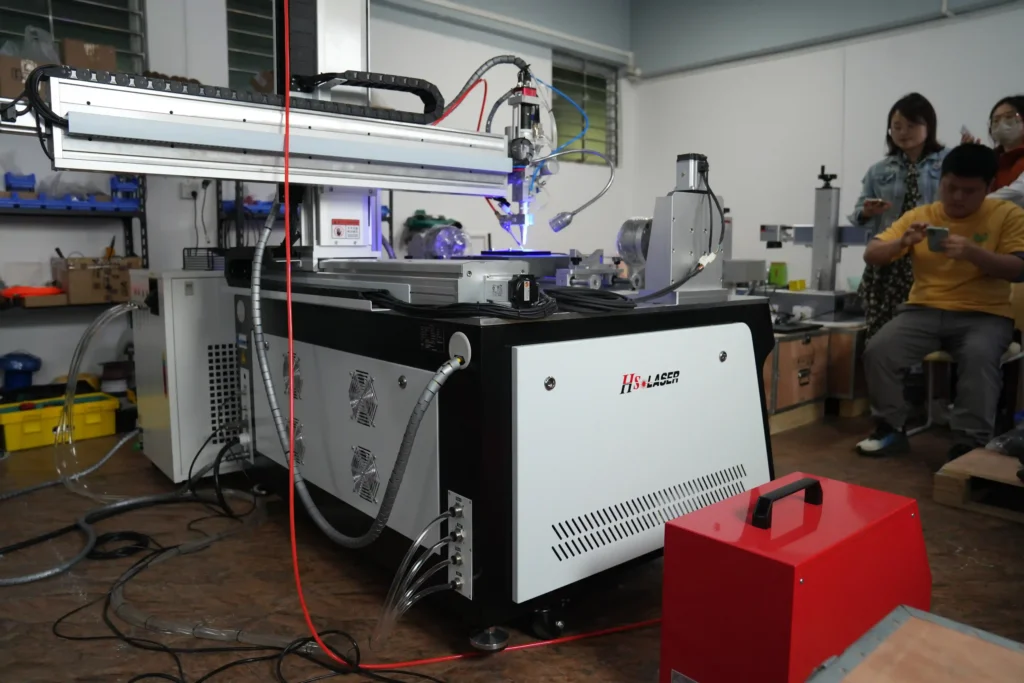
Maintaining stable weld quality can be challenging when manufacturers process different materials or complex components. Traditional welding methods may create excessive heat effects, material distortion, or inconsistent weld appearance. In this situation, the HS LASER Automation Fiber Laser Welding Machine with X Y Z Axis can provide an effective solution by using continuous fiber laser technology and a non-contact welding process. Key advantages include:
- High-Precision Welding Performance
The continuous fiber laser beam provides accurate energy control, allowing the system to create strong and consistent weld joints across different metal materials and thicknesses. - Reduced Heat-Affected Zone and Distortion
The controlled laser process minimizes heat transfer to surrounding areas, helping reduce deformation and maintain the original quality of precision components. - Lower Maintenance Requirements
As a non-contact welding solution, the system produces no tool wear and requires fewer consumable parts, which helps improve long-term operational efficiency.
The adjustable wobble weld head further improves processing flexibility by allowing adjustments to laser beam width, frequency, and welding modes according to different welding requirements. This helps manufacturers achieve better weld appearance and more stable results.
5. Flexible Processing for Different Materials and Applications
Another advantage of an Automatic Laser Welder is its ability to process various materials and product designs. By adjusting laser power, welding speed, and focus position, manufacturers can adapt the equipment to different production requirements. This flexibility makes laser welding suitable for:
- Stainless steel components
- Aluminum structures
- Carbon steel parts
- Copper-based products
It is also beneficial for customized manufacturing because digital programming allows companies to modify welding paths quickly without creating new physical tooling. This reduces preparation time when product designs change.
6. Easy Integration With Automated Manufacturing Systems
As factories move toward smart manufacturing, automation compatibility has become increasingly important. An Automatic Laser Welder can be integrated with robotic systems, CNC equipment, and automated production lines to create a more efficient manufacturing environment. Integration with automated systems can provide:
- More stable production processes
- Reduced manual material handling
- Improved workflow management
- Better production monitoring
This makes automatic laser welding a suitable choice for companies seeking to upgrade their manufacturing capabilities and improve production efficiency.
Common Applications of Automatic Laser Welders
Automotive Manufacturing
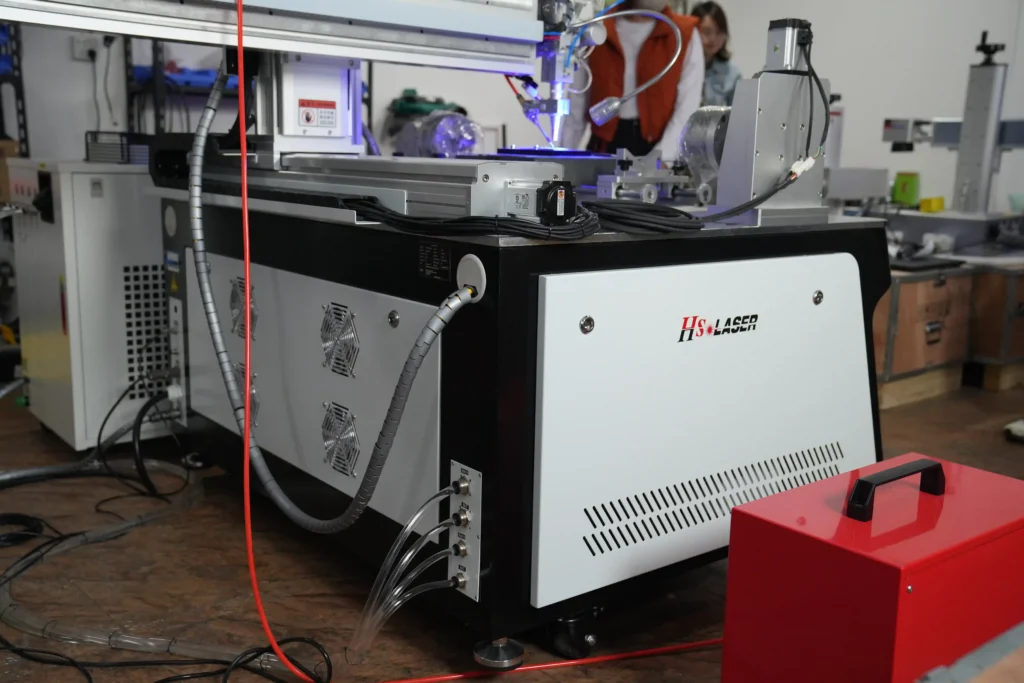
The automotive industry requires high-speed production and consistent welding quality. Automatic laser welding is commonly used for battery components, vehicle structures, brackets, and precision metal parts. Its repeatability and accuracy help manufacturers produce reliable components while meeting strict automotive quality standards.
Electronics and Precision Industries
Electronic products often require welding processes with minimal heat impact. Automatic laser welding is suitable for small metal components, electronic housings, and precision assemblies where accuracy is essential. The controlled energy input helps protect sensitive components while maintaining strong connections.
Industrial Equipment and Metal Fabrication
Industrial equipment manufacturers use laser welding for machinery parts, metal structures, and customized fabrication projects. The flexibility of automated systems allows companies to process different designs while maintaining consistent production quality.
How to Choose the Right Automatic Laser Welder?
Consider Material and Welding Requirements
Before purchasing equipment, manufacturers should evaluate material type, thickness, joint design, and required welding strength. Different applications may require different laser power levels and processing parameters.
Evaluate Automation Functions
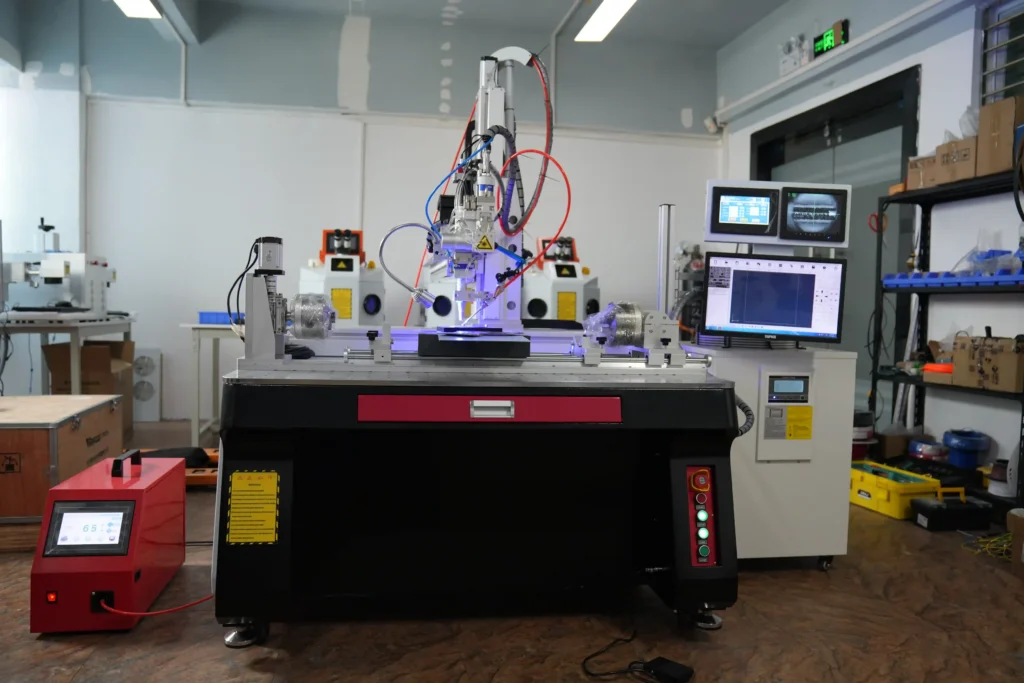
The automation level should match production needs. Important factors include CNC control capability, robotic compatibility, automatic feeding options, and software functions.
Check Equipment Reliability
Long-term equipment stability is essential for industrial production. Buyers should consider laser source quality, maintenance requirements, machine durability, and technical support before making a decision.
Conclusion
An Automatic Laser Welder offers manufacturers significant advantages, including higher precision, faster production, lower labor requirements, improved welding quality, and better automation compatibility. With the development of smart manufacturing, laser welding technology continues to help companies improve efficiency and maintain competitive production capabilities. Selecting the right welding equipment depends on material requirements, production volume, and application goals. If you have any questions about laser welding solutions or need professional advice, feel free to contact HS LASER for more information and suitable solutions for your manufacturing needs.