
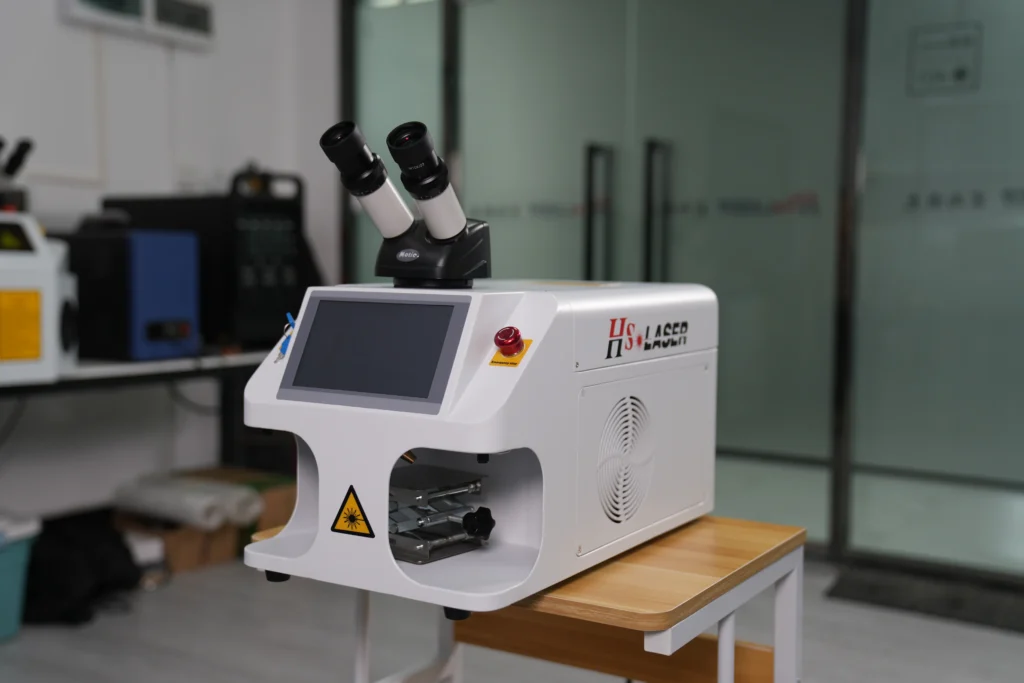
In the intricate world of jewelry fabrication and repair, the margin for error is nonexistent. As the industry evolves, the jewelry welding machine has emerged as a cornerstone technology, replacing traditional torches for high-precision tasks. Whether you are a master goldsmith or running a high-volume manufacturing plant, understanding the capabilities of this equipment is essential. Unlike conventional soldering, which relies on heat and filler alloys, modern laser welding offers a level of control that was previously impossible.
Understanding the Core Differences in Heat Application
The fundamental difference between a jewelry welding machine and traditional soldering lies in heat management. Traditional soldering requires heating the entire piece or a large section of it to temperatures often exceeding 1,100°F to melt the filler metal. This broad heat application can cause structural changes to the metal. In contrast, a jewelry soldering machine utilizes highly concentrated light energy. This localized heat creates a microscopic melt pool, keeping the surrounding metal cool and preventing the annealing (softening) of the overall piece.
Key differences in heat application include:
- Temperature control: Heat dissipates easily with traditional torches, whereas jewelry welding machines can precisely concentrate energy on the weld point.
- Cooling Speed: Laser welding offers rapid cooling phases, sometimes with nitrogen assistance, to prevent unwanted oxidation and maintain structural integrity.
- Thermal Distortion: Traditional methods have a high risk of warping delicate bands, whereas a jewelry welding machine reduces the heat-affected zone significantly.
Protecting Heat-Sensitive Gemstones During Repairs
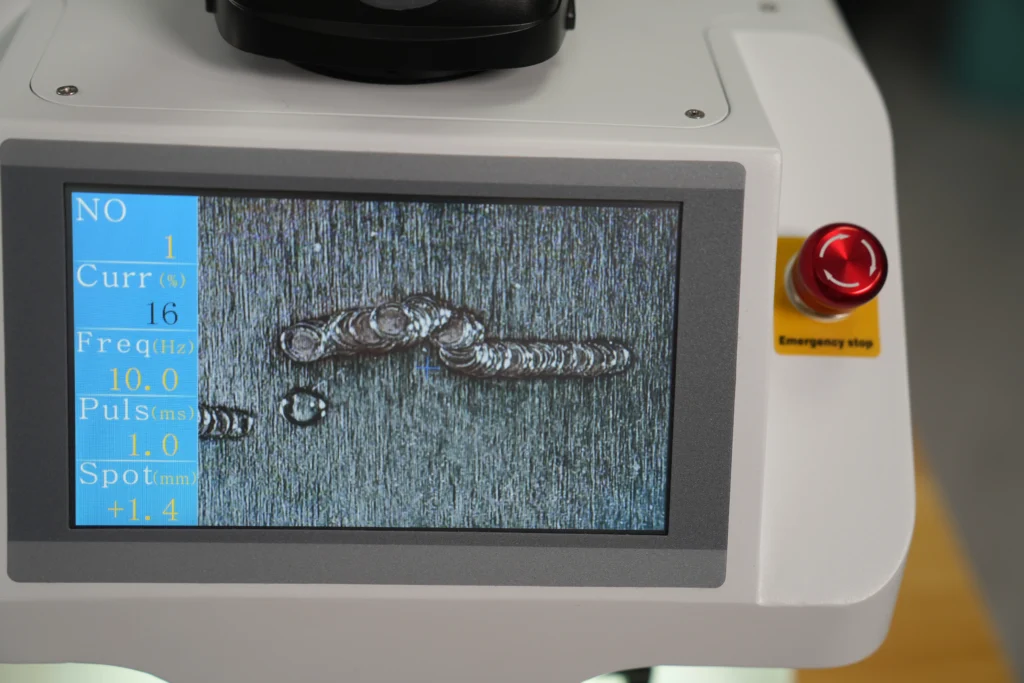
One of the most significant advantages of using jewelry soldering equipment is gemstone safety. Traditional soldering generates intense, widespread heat that can easily fracture heat-sensitive stones like emeralds, opals, or pearls. Consequently, jewelers must painstakingly remove these stones before soldering and reset them afterward. A jewelry welding machine eliminates this tedious step. Because the heat-affected zone is incredibly small, jewelers can safely weld broken prongs or resize rings with the gemstones still securely in place, saving hours of labor.
Benefits of stone-safe welding include:
- In-Situ Repairs: Directly repair settings holding diamonds or other hard stones without risking thermal shock.
- Time Efficiency: Skip the disassembly and reassembly phases entirely.
- Preservation of Vintage Details: Protect intricate milgrain edges and antique filigree work from melting or warping.
Weld Strength and Structural Integrity
When evaluating structural durability, a jewelry soldering machine often produces superior results. Traditional soldering relies on capillary action to draw a lower-purity filler alloy into the joint, which can create a weaker point over time. Conversely, a jewelry welding machine performs autogenous welding, meaning it melts the base metals together without necessarily requiring a filler. This creates a metallurgical bond that is often as strong as, or stronger than, the original metal, significantly reducing the risk of future breakage at the repair site.
Strength comparisons reveal:
- Metallurgical Bonding: Laser welds fuse metals at the molecular level, creating uniform crystal structures.
- Alloy Purity: Avoiding filler metals prevents alloy segregation, a common issue where metals like zinc or copper separate under stress in soldered joints.
- Tensile Strength: Tests show that laser-welded joints can withstand significantly higher stress before breaking compared to traditional soldered joints.
Post-Weld Cleanup and Polishing Requirements
The finishing process is another critical factor when comparing jewelry soldering equipment to traditional soldering. Traditional soldering requires flux to prevent oxidation, which leaves behind residue that must be cleaned through pickling, filing, and extensive polishing. Jewelry welding machines do not require flux; instead, they rely on argon gas shielding to prevent oxidation during welding. As a result, the weld is clean and requires minimal post-weld cleanup, drastically reducing the time spent at the polishing bench.
Workflow improvements include:
- No Flux Residue: Eliminates the need for pickling acids and extensive chemical cleaning.
- Minimal Filing: The precise nature of the weld means less excess metal to file away.
- Faster Turnaround: Clients receive their repaired items faster due to streamlined finishing processes.
Cost, Versatility, and Workflow Integration
Despite the technological superiority of a jewelry welding machine, traditional soldering still holds a place in the workshop. Soldering equipment is highly affordable and excellent for large-scale manufacturing or attaching large findings where localized heat is not an issue. However, for intricate repairs, resizing, and high-end custom fabrication, the jewelry soldering equipment is unmatched. Many modern jewelers choose to integrate both methods into their workflow, utilizing soldering for bulk assembly and a jewelry soldering machine for precision finishing and delicate stone-set repairs.
Integration strategies include:
- Hybrid Workflows: Use soldering for initial assembly and laser welding for final adjustments and repairs.
- Investment Justification: While a jewelry welding machine has a higher upfront cost, the reduction in rework and material loss often justifies the expense.
- Skill Adaptation: Training staff to use both methods maximizes workshop versatility and output quality.
Conclusion: Making the Right Choice for Your Studio
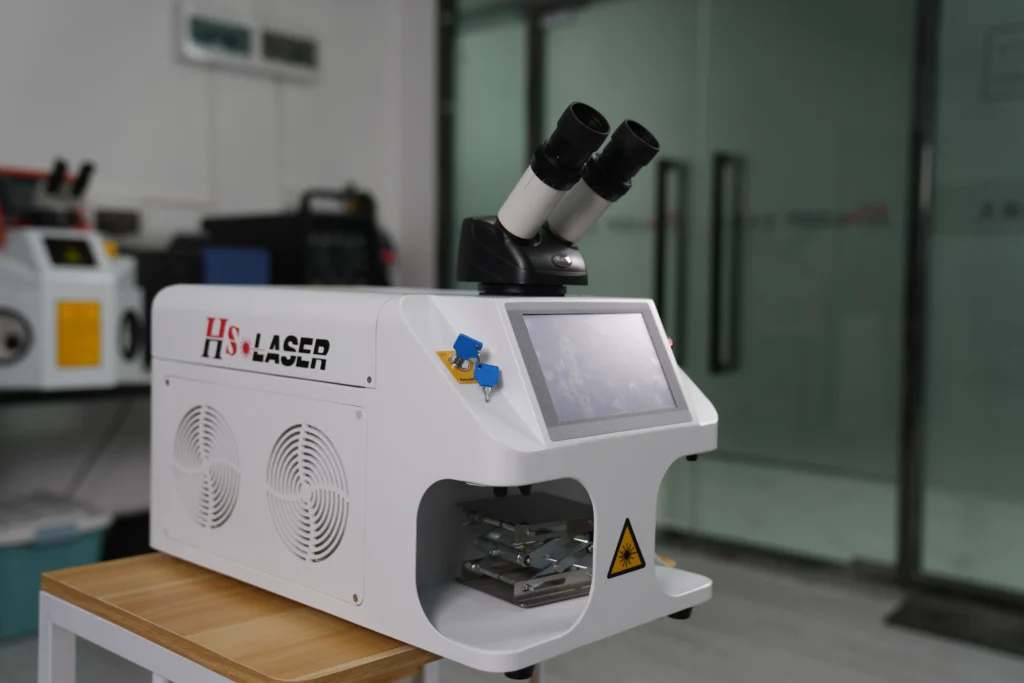
Ultimately, the choice between a jewelry soldering machine and traditional soldering is not about which is universally better, but which is better for the specific task at hand. While conventional processing relies on traditional welding, a jewelry welding machine is the perfect choice when it comes to high-precision repairs and stone-setting! By understanding the unique capabilities of each method, jewelers can optimize their processes, protect valuable materials, and deliver superior results to their clients. Investing in jewelry soldering equipment represents a commitment to modern craftsmanship and operational excellence.
If you are looking to upgrade your workshop with state-of-the-art technology, you can explore professional options at HS Laser.